Hello World! Processing
First episode of a new three-part documentary about creative programming languages.
(via Hello World!)
First episode of a new three-part documentary about creative programming languages.
(via Hello World!)
10 PRINT CHR$(205.5+RND(1)); : GOTO 10 (to give the book its full title) takes a single line of code and uses it as “a lens through which to consider the phenomenon of creative computing and the way computer programs exist in culture”: to summarise, it anatomizes simplicity and elegance in design.
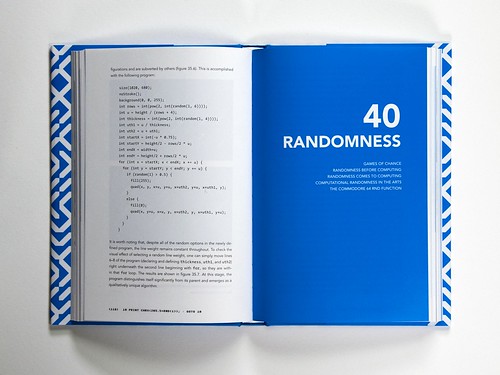
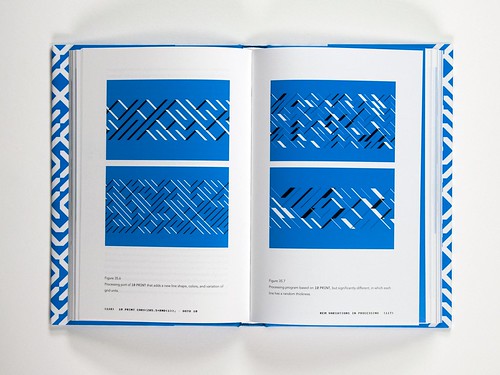
Chapter spreads from 10 PRINT CHR$(205.5+RND(1)); : GOTO 10
The MIT Press, 2012
Patsy Baudoin, John Bell, Ian Bogost, Jeremy Douglass, Mark C. Marino, Michael Mateas, Nick Montfort, Casey Reas, Mark Sample, and Noah Vawter.
Further information on the 10 PRINT website. All royalties from the sale of this book are being donated to PLAYPOWER, a nonprofit organisation that distributes affordable learning games across developing countries.
Storytelling is still important — the only difference is, the consumer is now the protagonist.
(Via Yahoo! and Ian Schafer)
This archive footage of Apple's ‘Think Different’ brand campaign launch in 1997 shows Steve Jobs at his rhetorical best.
(via O'Reilly Radar)
Cultural anthropologist and Intel researcher Genevieve Bell considers stories of London taxi drivers, a mother-in-law navigator, emergency weddings and Aboriginal cultural identity to help bring to question what it means to be location-aware in the digital world. This talk is thoughtful and entertaining.
(via where20)
Today is a wonderful assemblage of introspective moments recorded by Brooklyn-based designer/storyteller Jonathan Harris.
(via 99%)
This archived Greenpeace photo essay is a fascinating investigation into the illegal export of waste electronic goods from a city recycle centre in Basingstoke UK, to a sprawling electronics market in the Nigerian city of Lagos.


(The disposal of waste electrical and electronic equipment (WEEE) is a growing issue. Findings from ABI Research reveal 53 million tonnes of e-waste was generated worldwide in 2009. This amount includes broken or obsolete computers, printers, mobile phones, televisions, audio equipment and refrigerators which can contain harmful substances such as lead, bromine, cadmium, arsenic and mercury. Perhaps alarming is how little of this e-waste is processed and recycled by government regulated initiatives.
Despite national and international efforts to prevent export (including an EU ban in the mid-1990s), WEEE collected in North America and Western Europe is routinely shipped to developing and newly industrialised countries (Nigeria, Ghana, China, India, Pakistan) on the promise of being recycled or dismantled safely and reused on arrival. Left unregulated, unscrupulous exporters are dumping shipments of e-waste within these poor regions at the cost to the environment and to the health of the local communities who scavenge through the waste hoping to salvage valuable iron, copper, silicone and nickel from electrical and electronic components.
With recent forecasts predicting global e-waste recovery/reclamation revenues will reach $14.7 billion by 2014, only proper recycling and legal frameworks worldwide will help to ensure that WEEE disposal doesn't remain a dirty business!)
(Photo essay via Greenpeace, further reading at The Independent and BBC News)
Changing visions of the future captured in this film montage of clips from over fifty science fiction films.
(via Reynold Reynolds)